Pages

Monday, 18 February 2013

HALF WAY DONE │ YUKON COMMUNITIES WORKING TOGETHER


HALF WAY DONE │ YUKON COMMUNITIES WORKING TOGETHER
A summary review of the YDES project so far.
KEY CONCEPTS: unique community and business, triple bottom line, the pragmatics of community living
The Yukon Disability Employment Strategy team put in a huge effort through the late fall and early winter month to visit as many communities as possible, as soon as possible, to ensure we were able to develop a clearer picture of the needs and wants of our communities and their businesses.
As a part of our review work during the month of January 2012, we thought it might be useful to step back from the intensity of the research phase and share some of what we have learned with the world. To this end, we have now had one article accepted for publication in the prominent international disabilities magazine, Disability Now, and have a second article that we are finalizing for an online magazine called Disability Horizons.
Part of our justification for taking the time to focus on sharing some of what we have learned already with the world, is that we felt it important to continue to build upon the foundations established by the Six Steps to Success conference for a regional, national and even international conversation on disability employment issues – as identified here in the Yukon.
We will make sure we post a link to the live articles once they go to print/online. But in the meantime, you can have a sneak preview of the first article below.
We’d like to thank all the community stakeholders we have met so far for your openness and honesty in helping us to identify the priority issues for disabilities employment in Yukon. Great work everyone!
Happy reading!

~~~~~~~~~~~~~~~~~~

YUKON’S RUSH FOR HUMAN GOLD! (forthcoming, Disability Now http://www.disabilitynow.org.uk)
Imagine an untouched wilderness landscape four times the size of England, dizzyingly high mountain ranges and glacial-fed rivers dappled in gold and underpinned by diamond and silver seams.
Consider 360◦ wilderness vistas, where 17,000 wild grizzly and black bears wander the woods surrounding a handful of picturesque frontier towns tucked away in green valleys.
This is not mythology. It is the Yukon.
The Yukon is a geographically unique and isolated territory in north western Canada, sandwiched between British Columbia and the Arctic Ocean. It has the tallest peaks and coldest temperatures in North America, and is subsumed in Arctic twilight for half the year, contrasted by long summer days and the midnight sun.
The Yukon’s uniqueness ends abruptly, however, when we consider the statistics regarding employment equity for disabled people (or to use the preferred Canadian vernacular, ‘people with disabilities’). In the Yukon, like elsewhere, disabled people remain underrepresented within employment statistics and continue to face significant barriers in the workplace.
With a population of 35,000, an unemployment rate of 5%, a historically strong growth economy and highly educated workforce enjoying an equally high standard of living, the Yukon stands out as a northern oasis, free of the economic ills facing the rest of the western world. It is a refreshingly friendly, familiar place where everyone knows everyone else; where people stop and talk in the streets and welcome newcomers with smiles. What better place to develop a comprehensive disability employment strategy that ensures a barrier-free, progressive work and business environment?
In 2011 the Yukon Council on Disability took a bold step to resolve workplace discrimination across the Yukon, once and for all. They began with an international conference on disability employment issues, aiming to lay the foundations for a coordinated, comprehensive approach to firmly establish employment equity for disabled people across this vast and wilderness frontier landscape.
For the first time, business owners and managers across the whole of the Yukon have been asked for their perspective and input about why disabled people continue to face barriers in the workplace.
Now, at the start of 2012, the Yukon Council on Disability is proud to report significant progress is underway – real, measurable progress – grounded in the recognition by businesses across the Yukon that, yes, barriers preventing people from having a full life, including employment, remains a serious problem, and one that can and must be resolved through progressive, coordinated business and community planning.
To be clear, though, Yukon business owners are not discussing workplace accommodations and revising human resources policies and procedures simply out of the goodness of their hearts. Yukon might be a place full of thoughtful, highly educated people, but business is business wherever you go.
Indeed, Yukon employers identified that they are interested in recruiting and retaining disabled people because it makes good business sense. An inclusive, happy, productive workforce = efficient, expanding, successful, sustainable business. And if there is one thing that all successful business leaders agree on, it’s that a business is only as successful as its people. What businesses depend on is access to a highly skilled, experienced and motivated labour market, and that includes disabled people.
It is not our intention to imply that business owners in the Yukon are only interested in the bottom line, with disabled people simply an untapped labour market and instrument to coldly increase productivity. Rather, without necessarily using the terminology, business owners are thinking imaginatively about business in terms of the triple bottom line – people, planet, profit – and the benefits of becoming the employer and provider of choice to an increasingly discerning marketplace.
In many ways, building a successful business is about connecting the dots that comprise the full image of what you are trying to achieve as a business and good corporate citizen. Success, check. Sustainability, yes. Committed labour force, essential. Support of the community, absolutely. A complete, well-rounded happy work environment, yes please. But connecting all these dots is not as simple as it might seem.
Unlike a children’s connect-the-dots activity book, entrepreneurs and business owners are starting with a blank page, having to identify all the dots (read, business planning factors), then mapping these out in a way that forms the shape of their idealised business (products, markets, size, growth, etc.) and finally connecting the dots together in a way that results in a business resembling the intended progressive, friendly corporate citizen. To use a hackneyed example, think Apple Inc and its corporate image: imaginative, barrier-free, shrewd, customer-focussed, creative products for a whole, inclusive community.
Smart business owners recognise they can simultaneously mitigate risk of failure and promote growth simply by taking progressive steps towards considering the needs and desires of their employees and the community in which they operate. But, articulating and persisting with a progressive, strategic business plan is not easy. Managers must resist the everyday temptation of short-term gains through cost-cutting in areas such as workplace innovations inspired by fresh, forward-thinking universal design. Recruiting or retaining a person with a disability and modifying the business to ensure universal accessibility is invariably an investment in the future.
Interestingly, one of the key outcomes of this present initiative is that businesses are coming to terms with the revelation that many of employees they depend on most of all are in fact disabled. This awareness, admission and recognition by business is indeed new. Many businesses might have been employing and accommodating disabilities for years, but by going through this process of questioning, discussing and reflecting, businesses are finally putting words and structures around what they have been doing intuitively. The translation from the intuitive to the explicit is the essential first step to the kind of strategic planning that will enable businesses to expand productivity through targeted workplace modernisations, inclusive of accommodations to the advantage of all employees.  
It’s now January, 2012, and the Yukon Council on Disability is looking ahead to completing the consultation phase of the Yukon Disability Employment Strategy development with business (see the blogs, here and here) and undertaking the difficult task of developing the strategy itself: the set of guidelines, best practices  and resources which will help businesses create successful, inclusive, barrier-free workplaces. With disability as a core component of a whole community, businesses in the Yukon are eager to finally connect all the dots and demonstrate to the world that equity in employment for disabled people is not only possible, but good business.
A summary review of the YDES project so far.
KEY CONCEPTS: unique community and business, triple bottom line, the pragmatics of community living
The Yukon Disability Employment Strategy team put in a huge effort through the late fall and early winter month to visit as many communities as possible, as soon as possible, to ensure we were able to develop a clearer picture of the needs and wants of our communities and their businesses.
As a part of our review work during the month of January 2012, we thought it might be useful to step back from the intensity of the research phase and share some of what we have learned with the world. To this end, we have now had one article accepted for publication in the prominent international disabilities magazine, Disability Now, and have a second article that we are finalizing for an online magazine called Disability Horizons.
Part of our justification for taking the time to focus on sharing some of what we have learned already with the world, is that we felt it important to continue to build upon the foundations established by the Six Steps to Success conference for a regional, national and even international conversation on disability employment issues – as identified here in the Yukon.
We will make sure we post a link to the live articles once they go to print/online. But in the meantime, you can have a sneak preview of the first article below.
We’d like to thank all the community stakeholders we have met so far for your openness and honesty in helping us to identify the priority issues for disabilities employment in Yukon. Great work everyone!
Happy reading!

Monday, 11 February 2013

YUKON’S RUSH FOR HUMAN GOLD!


Imagine an untouched wilderness landscape four times the size of England, dizzyingly high mountain ranges and glacial-fed rivers dappled in gold and underpinned by diamond and silver seams.

Consider 360◦ wilderness vistas, where 17,000 wild grizzly and black bears wander the woods surrounding a handful of picturesque frontier towns tucked away in green valleys.
This is not mythology. It is the Yukon.
The Yukon is a geographically unique and isolated territory in north western Canada, sandwiched between British Columbia and the Arctic Ocean. It has the tallest peaks and coldest temperatures in North America, and is subsumed in Arctic twilight for half the year, contrasted by long summer days and the midnight sun.
The Yukon’s uniqueness ends abruptly, however, when we consider the statistics regarding employment equity for disabled people (or to use the preferred Canadian vernacular, ‘people with disabilities’). In the Yukon, like elsewhere, disabled people remain underrepresented within employment statistics and continue to face significant barriers in the workplace.
With a population of 35,000, an unemployment rate of 5%, a historically strong growth economy and highly educated workforce enjoying an equally high standard of living, the Yukon stands out as a northern oasis, free of the economic ills facing the rest of the western world. It is a refreshingly friendly, familiar place where everyone knows everyone else; where people stop and talk in the streets and welcome newcomers with smiles. What better place to develop a comprehensive disability employment strategy that ensures a barrier-free, progressive work and business environment?
In 2011 the Yukon Council on Disability took a bold step to resolve workplace discrimination across the Yukon, once and for all. They began with aninternational conference on disability employment issues, aiming to lay the foundations for a coordinated, comprehensive approach to firmly establish employment equity for disabled people across this vast and wilderness frontier landscape.
For the first time, business owners and managers across the whole of the Yukon have been asked for their perspective and input about why disabled people continue to face barriers in the workplace.
Now, at the start of 2012, the Yukon Council on Disability is proud to report significant progress is underway – real, measurable progress – grounded in the recognition by businesses across the Yukon that, yes, barriers preventing people from having a full life, including employment, remains a serious problem, and one that can and must be resolved through progressive, coordinated business and community planning.
To be clear, though, Yukon business owners are not discussing workplace accommodations and revising human resources policies and procedures simply out of the goodness of their hearts. Yukon might be a place full of thoughtful, highly educated people, but business is business wherever you go.
Indeed, Yukon employers identified that they are interested in recruiting and retaining disabled people because it makes good business sense. An inclusive, happy, productive workforce = efficient, expanding, successful, sustainable business. And if there is one thing that all successful business leaders agree on, it’s that a business is only as successful as its people. What businesses depend on is access to a highly skilled, experienced and motivated labour market, and that includes disabled people.
It is not our intention to imply that business owners in the Yukon are only interested in the bottom line, with disabled people simply an untapped labour market and instrument to coldly increase productivity. Rather, without necessarily using the terminology, business owners are thinking imaginatively about business in terms of the triple bottom line – people, planet, profit – and the benefits of becoming the employer and provider of choice to an increasingly discerning marketplace.
In many ways, building a successful business is about connecting the dots that comprise the full image of what you are trying to achieve as a business and good corporate citizen. Success, check. Sustainability, yes. Committed labour force, essential. Support of the community, absolutely. A complete, well-rounded happy work environment, yes please. But connecting all these dots is not as simple as it might seem.
Unlike a children’s connect-the-dots activity book, entrepreneurs and business owners are starting with a blank page, having to identify all the dots (read, business planning factors), then mapping these out in a way that forms the shape of their idealised business (products, markets, size, growth, etc.) and finally connecting the dots together in a way that results in a business resembling the intended progressive, friendly corporate citizen. To use a hackneyed example, think Apple Inc and its corporate image: imaginative, barrier-free, shrewd, customer-focussed, creative products for a whole, inclusive community.
Smart business owners recognise they can simultaneously mitigate risk of failure and promote growth simply by taking progressive steps towards considering the needs and desires of their employees and the community in which they operate. But, articulating and persisting with a progressive, strategic business plan is not easy. Managers must resist the everyday temptation of short-term gains through cost-cutting in areas such as workplace innovations inspired by fresh, forward-thinking universal design. Recruiting or retaining a person with a disability and modifying the business to ensure universal accessibility is invariably an investment in the future.
Interestingly, one of the key outcomes of this present initiative is that businesses are coming to terms with the revelation that many of employees they depend on most of all are in fact disabled. This awareness, admission and recognition by business is indeed new. Many businesses might have been employing and accommodating disabilities for years, but by going through this process of questioning, discussing and reflecting, businesses are finally putting words and structures around what they have been doing intuitively. The translation from the intuitive to the explicit is the essential first step to the kind of strategic planning that will enable businesses to expand productivity through targeted workplace modernisations, inclusive of accommodations to the advantage of all employees.  
It’s now January, 2012, and the Yukon Council on Disability is looking ahead to completing the consultation phase of the Yukon Disability Employment Strategy development with business (see the blogs, here and here) and undertaking the difficult task of developing the strategy itself: the set of guidelines, best practices  and resources which will help businesses create successful, inclusive, barrier-free workplaces. With disability as a core component of a whole community, businesses in the Yukon are eager to finally connect all the dots and demonstrate to the world that equity in employment for disabled people is not only possible, but good business.


Monday, 4 February 2013

ROSS RIVER │ JOURNEY TO THE CENTER OF YUKON

The long slow road to Ross River and the anticipation of understanding the disability employment issues of this unique little town in the heart of Yukon
ROSS RIVER │ JOURNEY TO THE CENTER OF YUKON
The long slow road to Ross River and the anticipation of understanding the disability employment issues of this unique little town in the heart of Yukon
Ross River is a community of approximately 300 year-round residents. It is located in central Yukon, accessible from Watson Lake, 6 hours drive to the south-east up a predominantly single-track gravel road in winter and summer.
The journey time to Whitehorse is a similar distance, but going round the loop and down past Carmacks and on paved roads. There is one other access on a summer road only from Jakes Corner directly south on the Alaska Highway.
Travelling to Ross River in November from Watson Lake was, to say the least, a journey which few have done – particularly at -25C in snow and starting out at 4am! But, alas, no misadventures on the way, and just enough left in the tank as I arrived that there was no need for coasting down the hills over the last few miles as the sun began to lift just over the horizon at 10am.
Six hours after I departed Watson Lake I was in my first meeting of the day, and looking forward to understanding the issues of this historically significant little town tucked away down in the heart of Yukon. 

Monday, 21 January 2013

WATSON LAKE │ THE POSSIBILITY OF A UNIVERSALLY ACCESSIBLE COMMUNITY

Watson Lake has the services, businesses, and political and organizational structures to enable significant change in support of people with disabilities in the workplace.
WATSON LAKE │ THE POSSIBILITY OF A UNIVERSALLY ACCESSIBLE COMMUNITY
Watson Lake has the services, businesses, and political and organizational structures to enable significant change in support of people with disabilities in the workplace. 
KEY CONCEPTS: universal design; readiness-to-work; public and private partnerships; project planning
Watson Lake employers identified specific gaps in the readiness-to-work of prospective employees – namely, the lack of education, skills and motivation that are essential to succeed in the labour force.
This so-called gap in readiness-to-work is, in part, a result of disabilities issues: learning disabilities, mental health, and issues arising as a consequence of FASD.
One provider suggested that area educators of school-aged children and youth are reporting that 60% of students in school have a learning disability of some kind or another. This estimate might seem high at first, but when considered within the context of a reported 50%+ occurrence of FASD in rural Yukon communities, a 60% learning disabilities rate seems highly likely.
The high rate of learning disabilities is itself only a problem for employers and employment when it prevents individuals from being able to achieve career and life goals. Aside from the absolute necessity to reduce the risk factors for learning disabilities, notably alcohol and drug use during pregnancy and alcohol and drug abuse at points throughout life, there is an immediate need to coordinate efforts to ensure people with disabilities are able to access the education and training needed in order improve readiness-to-work and associated career and life choices.
The agencies and service providers in the Watson Lake suggested ways of addressing this problem, breaking the cycle through improved access to learning and supports.
Here is what some of them had to say.
The first step in bringing about full and open access for people with disabilities across the wider Watson Lake community, including employment, is for the public sector to model best practice in terms of the necessity and benefits of universal design in progressive modern towns and cities. Some of the exiting public services infrastructure has limited access – including essential public services offices. In order for employers to take an initiative supporting disability employment seriously, the public (government) services must be seen to embrace the principles and apply them to positive effect. This appears to be a key initial step – or at the least, coordinated to roll out in-step with a prospective implementation of a Yukon Disability Employment Strategy in Watson Lake.
Employers are willing to accept employees with disabilities, but only on the condition that they are able to complete the work as per job specifications. In other words, employers need supports in understanding the services and accommodations that are available in order to adapt a job and the workplace, enabling them to accommodate disabilities with risk of excessive cost to the business. Employers are pragmatic, to be sure. However, there is an opportunity to extend the scope of what is considered good business practice to include proactive responses to disability employment issues – reducing potential human resources problems and concerns in the workplace when employees experience difficulties associated with a disability of one kind or another over the course of their working life.
The town of Watson Lake would benefit from a community-wide accessibility audit – encompassing the whole of the public and private sector, including services and agencies, businesses, and public infrastructure and conveniences. Undertaking both an annual audit, in addition to ensuring that all town and business project planning applications included an analysis of universal design principles in project and event planning would contribute to developing a culture of inclusiveness and progressive thinking regarding disabilities and the benefits of a fully accessible and equitable community development.
Education has a significant role to play in supporting labour market development in Watson Lake. Existing services include a full service education system, from primary through tertiary education, and additional services through training providers such as Watson Lake Community Outreach. Providers recognize that a significant barrier to employment equity and workplace accessibility can be overcome by further education and skills development. Job seekers struggle to successfully complete education requirements and applications for employment given the complexity of the training and associated employment bureaucracy. Many job seekers with disabilities have low literacy and numeracy skills making it difficult to retain their employment if the job requires significant amounts of in-service training and independent coursework. Supports for people with learning disabilities and other barriers to learning require a support network of education and training providers to ensure they have the needed support to sustain their education and training requirements and remain in employment.
Service providers in Watson Lake represent an energetic and talented pool of community-minded people, ready and willing to work with the business community and political leaders to affect positive change. A Yukon Disability Employment Strategy needs to become a conduit for supporting networking and communication within communities – enabling grass-roots initiatives to take hold and drive progressive change.
The ideas, interest, and energy needed to increase the representation of people with disabilities in the workplace are already in place in Watson Lake. All that is needed is the means to coordinate positive change. The Yukon Disability Employment Strategy looks forward to returning to Watson Lake in the not too distant future to work towards achieving this goal.
Unit then… 

KEY CONCEPTS: universal design; readiness-to-work; public and private partnerships; project planning
Watson Lake employers identified specific gaps in the readiness-to-work of prospective employees – namely, the lack of education, skills and motivation that are essential to succeed in the labour force.
This so-called gap in readiness-to-work is, in part, a result of disabilities issues: learning disabilities, mental health, and issues arising as a consequence of FASD.
One provider suggested that area educators of school-aged children and youth are reporting that 60% of students in school have a learning disability of some kind or another. This estimate might seem high at first, but when considered within the context of a reported 50%+ occurrence of FASD in rural Yukon communities, a 60% learning disabilities rate seems highly likely.
The high rate of learning disabilities is itself only a problem for employers and employment when it prevents individuals from being able to achieve career and life goals. Aside from the absolute necessity to reduce the risk factors for learning disabilities, notably alcohol and drug use during pregnancy and alcohol and drug abuse at points throughout life, there is an immediate need to coordinate efforts to ensure people with disabilities are able to access the education and training needed in order improve readiness-to-work and associated career and life choices.
The agencies and service providers in the Watson Lake suggested ways of addressing this problem, breaking the cycle through improved access to learning and supports.
Here is what some of them had to say.
  • The first step in bringing about full and open access for people with disabilities across the wider Watson Lake community, including employment, is for the public sector to model best practice in terms of the necessity and benefits of universal design in progressive modern towns and cities. Some of the exiting public services infrastructure has limited access – including essential public services offices. In order for employers to take an initiative supporting disability employment seriously, the public (government) services must be seen to embrace the principles and apply them to positive effect. This appears to be a key initial step – or at the least, coordinated to roll out in-step with a prospective implementation of a Yukon Disability Employment Strategy in Watson Lake.
  • Employers are willing to accept employees with disabilities, but only on the condition that they are able to complete the work as per job specifications. In other words, employers need supports in understanding the services and accommodations that are available in order to adapt a job and the workplace, enabling them to accommodate disabilities with risk of excessive cost to the business. Employers are pragmatic, to be sure. However, there is an opportunity to extend the scope of what is considered good business practice to include proactive responses to disability employment issues – reducing potential human resources problems and concerns in the workplace when employees experience difficulties associated with a disability of one kind or another over the course of their working life.
  • The town of Watson Lake would benefit from a community-wide accessibility audit – encompassing the whole of the public and private sector, including services and agencies, businesses, and public infrastructure and conveniences. Undertaking both an annual audit, in addition to ensuring that all town and business project planning applications included an analysis of universal design principles in project and event planning would contribute to developing a culture of inclusiveness and progressive thinking regarding disabilities and the benefits of a fully accessible and equitable community development.
  • Education has a significant role to play in supporting labour market development in Watson Lake. Existing services include a full service education system, from primary through tertiary education, and additional services through training providers such as Watson Lake Community Outreach. Providers recognize that a significant barrier to employment equity and workplace accessibility can be overcome by further education and skills development. Job seekers struggle to successfully complete education requirements and applications for employment given the complexity of the training and associated employment bureaucracy. Many job seekers with disabilities have low literacy and numeracy skills making it difficult to retain their employment if the job requires significant amounts of in-service training and independent coursework. Supports for people with learning disabilities and other barriers to learning require a support network of education and training providers to ensure they have the needed support to sustain their education and training requirements and remain in employment.
Service providers in Watson Lake represent an energetic and talented pool of community-minded people, ready and willing to work with the business community and political leaders to affect positive change. A Yukon Disability Employment Strategy needs to become a conduit for supporting networking and communication within communities – enabling grass-roots initiatives to take hold and drive progressive change.
The ideas, interest, and energy needed to increase the representation of people with disabilities in the workplace are already in place in Watson Lake. All that is needed is the means to coordinate positive change. The Yukon Disability Employment Strategy looks forward to returning to Watson Lake in the not too distant future to work towards achieving this goal.
Unit then… 

Monday, 7 January 2013

WATSON LAKE │ A FUTURE MODEL OF UNIVERSAL DESIGN FOR NORTHERN RURAL LIVING?

A northern rural town with the infrastructure and vision and values needed to develop a model of inclusive, equitable, progressive employment practices.


KEY CONCEPTS: essential community infrastructure; vision and values; readiness to change; progressive town planning
Watson Lake is the first port-of-call for travellers arriving in Yukon from British Columbia along the Alaska Highway. It is also the self declared transportation hub for the region, with links to western Yukon, on through Whitehorse and to Alaska, but also north to central Yukon and further to the neighbouring Northwest Territories.
The Watson Lake town website traces the origins of current town site to 1941 and the establishment of the Alaska Highway. The current population estimate is 1200, fluctuating with seasonal labour and peaking during summer months.
Watson is what might be called a full-service town. It has education services from primary through tertiary, with its own Yukon College Campus attached to the High School, a hospital, and full complement of social and public services. A town hall and chamber of commerce are in place to coordinate community economic development planning. The business community is diverse and well developed, with choices for shopping and access to essential items without the need to travel the 5+ hours to Whitehorse – a significant advantage over many Yukon towns.
In short Watson Lake has the essential community infrastructure to be a thriving and progressive model of rural northern living. Certainly the people we met during our discussions regarding the development of the Yukon Disability Employment Strategy were insightful, forward-thinking, and willing to reflect on what it takes to make an inclusive, equitable, and progressive town that supported the accommodation of disabilities with the workplace.
We will explore a number of issues arising from our conversations in the blogs to follow. But for now, consider Watson Lake as an inclusive Yukon town in making. All that is needed is a coordinated strategy to set in motion the vision and values of forward-thinking employers and service providers to make this (not so little) town model of universal design for northern rural living.

Monday, 17 December 2012

TESLIN │ EMPLOYERS AND EMPLOYEES ENCOUNTER UNIQUE BARRIERS


A multi-agency model is essential to support both employers and employees to overcome the barriers surrounding disability employment.
TESLIN │ EMPLOYERS AND EMPLOYEES ENCOUNTER UNIQUE BARRIERS
A multi-agency model is essential to support both employers and employees to overcome the barriers surrounding disability employment. 
KEY CONCEPTS: FASD; readiness-to-work; multi-agency support; education; self-awareness; motivation.
In our previous post regarding the disability employment issues in Teslin, we focussed on the significant concerns arising as a function of Fetal Alcohol Spectrum Disorders (FASD), which is estimated to affect a significant portion of the working population.
Depending on the severity of FASD it has far reaching and lasting implications for people affected, including, cognitive and functional disabilities which can result in poor memory, attention deficits, impulsive behaviours, and poor cause-effect reasoning. Secondary disabilities include increased risk for mental health problems and drug and alcohol addictions.
Specialist disability and FASD supports are available through agencies based in Whitehorse and by way of health and social services centres in communities. However, the connections between these supports and employment services are less clearly defined. The Yukon Disability Employment Strategy is beginning to recognize that this is key area of focus for supporting sustainable community development that includes the increased representation of people with disabilities in the workplace.
Our discussions with employers and agencies in Teslin laid the ground work down for understanding where efforts need to be focussed , but also helped us in understanding  the best practice that is presently in place and supporting disabilities employment and community growth.
Firstly, and without taking our focus off the main issue for the community, namely FASD, we must also consider the other disability employment issues identified by stakeholders.
While FASD dominated discussions regarding barriers to employment, chronic illness and injuries were also a significant factor in limiting access to work. These issues tended to be addressed by way of the Yukon Workers Compensation Health and Safety Board (YWCHSB), through what might be considered more standardized methods for addressing identified disabilities issues in the workplace.
Employers identified that they were familiar with the procedures for responding to acquired disabilities in the workplace, inclusive of consultations with the local Health Centre to determine needs and prognosis.
In addition to YWCHSB referrals, one employer indicated they are innovating the human resources procedures to include consultation with medical professionals to advise on adjusting job descriptions in order to retain employees who might not otherwise be able to stay in work due to an acute or chronic disability/injury. The use of professional services to support the development of employment solutions seems an exemplar of how employers might utilize medical consultations for purposes other than simply determining if a given employee can or cannot continue in work as defined by a rigid job specification. This type of consultative model, where medical professionals work cooperatively with employers could extend to include a full range of services, including occupational, physiotherapy, social and mental health services to name a few. This was an exciting innovation, and one that is perhaps worth exploring further as a feature of a YDES.
Returning to the topic of the key disability employment issues for Teslin, which extend to workforce development and sustainable community development planning, employers worryingly identified that it is difficult to recruit staff from the local community in the first instance, partly because the barriers to employment begin with individual readiness-to-work. We have discussed this issue at length in other blog entries, as it appears to be an emerging concerning pattern for businesses. In some case, employers are forced to recruit from outside the local community, in spite of their efforts to find local area candidates to staff their businesses.
Education and training is perhaps as important, if not more important, than ensuring physical, social, emotional and mental health issues are full addressed prior to developing a return to work strategy. Effective education and training programs not only provide the skills and knowledge prospective employees require, but also the confident and self-awareness that enables one to map out ambitious yet realistic goals with a clear progression pathway to achieve personal targets.
Employers and agencies seem to be suggesting that overcoming barriers to employment can sometimes be as much about personal motivation and determination on the part of the employee as it is about the employer being open and responsive to accommodating individual needs over time. 


KEY CONCEPTS: FASD; readiness-to-work; multi-agency support; education; self-awareness; motivation.

In our previous post regarding the disability employment issues in Teslin, we focussed on the significant concerns arising as a function of Fetal Alcohol Spectrum Disorders (FASD), which is estimated to affect a significant portion of the working population.
Depending on the severity of FASD it has far reaching and lasting implications for people affected, including, cognitive and functional disabilities which can result in poor memory, attention deficits, impulsive behaviours, and poor cause-effect reasoning. Secondary disabilities include increased risk for mental health problems and drug and alcohol addictions.
Specialist disability and FASD supports are available through agencies based in Whitehorse and by way of health and social services centres in communities. However, the connections between these supports and employment services are less clearly defined. The Yukon Disability Employment Strategy is beginning to recognize that this is key area of focus for supporting sustainable community development that includes the increased representation of people with disabilities in the workplace.
Our discussions with employers and agencies in Teslin laid the ground work down for understanding where efforts need to be focussed , but also helped us in understanding  the best practice that is presently in place and supporting disabilities employment and community growth.
Firstly, and without taking our focus off the main issue for the community, namely FASD, we must also consider the other disability employment issues identified by stakeholders.
While FASD dominated discussions regarding barriers to employment, chronic illness and injuries were also a significant factor in limiting access to work. These issues tended to be addressed by way of the Yukon Workers Compensation Health and Safety Board (YWCHSB), through what might be considered more standardized methods for addressing identified disabilities issues in the workplace.
Employers identified that they were familiar with the procedures for responding to acquired disabilities in the workplace, inclusive of consultations with the local Health Centre to determine needs and prognosis.
In addition to YWCHSB referrals, one employer indicated they are innovating the human resources procedures to include consultation with medical professionals to advise on adjusting job descriptions in order to retain employees who might not otherwise be able to stay in work due to an acute or chronic disability/injury. The use of professional services to support the development of employment solutions seems an exemplar of how employers might utilize medical consultations for purposes other than simply determining if a given employee can or cannot continue in work as defined by a rigid job specification. This type of consultative model, where medical professionals work cooperatively with employers could extend to include a full range of services, including occupational, physiotherapy, social and mental health services to name a few. This was an exciting innovation, and one that is perhaps worth exploring further as a feature of a YDES.
Returning to the topic of the key disability employment issues for Teslin, which extend to workforce development and sustainable community development planning, employers worryingly identified that it is difficult to recruit staff from the local community in the first instance, partly because the barriers to employment begin with individual readiness-to-work. We have discussed this issue at length in other blog entries, as it appears to be an emerging concerning pattern for businesses. In some case, employers are forced to recruit from outside the local community, in spite of their efforts to find local area candidates to staff their businesses.
Education and training is perhaps as important, if not more important, than ensuring physical, social, emotional and mental health issues are full addressed prior to developing a return to work strategy. Effective education and training programs not only provide the skills and knowledge prospective employees require, but also the confident and self-awareness that enables one to map out ambitious yet realistic goals with a clear progression pathway to achieve personal targets.
Employers and agencies seem to be suggesting that overcoming barriers to employment can sometimes be as much about personal motivation and determination on the part of the employee as it is about the employer being open and responsive to accommodating individual needs over time. 

Monday, 3 December 2012

TESLIN │ A RESILIENT BUSINESS COMMUNITY SEEKING GROWTH

Community economic development and inclusion of people with disabilities are two sides of the same coin.

TESLIN │ A RESILIENT BUSINESS COMMUNITY SEEKING GROWTH
Community economic development and inclusion of people with disabilities are two sides of the same coin. 
KEY CONCEPTS: barriers to community economic growth = barriers to inclusion; Fetal Alcohol Spectrum Disorders (FASD); business resiliency
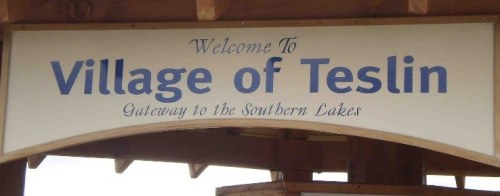
The Yukon Government describes Teslin on their About Yukon page as a “Tlingit community located on the narrows of Teslin Lake at the mouth of the Nisutlin River”.  As far as communities go in Yukon, Teslin is considered relatively easy to travel to from Whitehorse, at two hours when road conditions are good. This might lead one to assume Teslin might be similar to Haines Junction in many ways, both within easy driving distance of Whitehorse and all it offers in terms of services and supports. Teslin’s population is about half that of Haines Junction, at 450, and it is economic activity is driven largely by the First Nation, the Teslin Tlingit Council and not area businesses based along the Alaska Highway as in Haines Junction.
It seems relevant to consider these two communities together based on their proximity to Whitehorse, given employers and agencies in the communities are indicating that limited access to resources and services in Whitehorse is a significant barrier economic activity and community supports. Both these Yukon communities have good access to Whitehorse, have community campuses of Yukon College, established Health and Social Services and a core economy that includes seasonal opportunities from tourism and year-round economic activity underpinned by the larger regional employer, the First Nation.  It would seem that with a clear pattern in economic activity, established over decades, both these communities might be expanding opportunities through strategic community and business planning to capitalize on this level of predictability. Both communities also indicated there are significant barriers standing in the way of opportunities for community and economic growth, namely, the significant and deleterious effects associated with addictions issues and its consequent knock-on effects.
FASD (Fetal Alcohol Spectrum Disorders) has consistently been identified as the number 1 factor limiting employment, business development and sustainable community growth.  To be clear, this issue is not just a community problem, or even a northern problem. FASD appears to be associated communities with a history of economic and social deprivation – the kind of deprivation that limits individual opportunities in education and social mobility, and can result in an increased risk for drug and alcohol abuse. By no means are we identifying an issue that hasn’t been discussed before. However, within the context of working towards improving accessibility in the workplace for people with disabilities, we find that at key barrier that must be overcome to achieve this goal is supporting employers in effectively accommodating employees with FASD. Other communities have indicated that at the very least, 50% of the working-age population has some kind of learning or social-emotional-behavioural disability associated with FASD. For the YDES to be a success, we must successfully address the barriers to employment for people affected by FASD.
 Like the other communities in Yukon, Teslin has business leader and entrepreneurs who remain ever hopeful and open to making progress within their community. This includes developing strategies to support people with disabilities within their employment, even if they are working towards this goal without the direct support of key disabilities and employment agencies and service providers.
What we found in Teslin was a resiliency amongst employers to work with and support their family, friends, community members to find and stay in their jobs – in spite of personal, social, and health issues that might present barriers to employment on a daily basis.
We will share more on the thoughts, vision, and concerns of employers and agencies in Teslin in our next blog entry, to follow. 


KEY CONCEPTS: barriers to community economic growth = barriers to inclusion; Fetal Alcohol Spectrum Disorders (FASD); business resiliency
The Yukon Government describes Teslin on their About Yukon page as a “Tlingit community located on the narrows of Teslin Lake at the mouth of the Nisutlin River”.  As far as communities go in Yukon, Teslin is considered relatively easy to travel to from Whitehorse, at two hours when road conditions are good. This might lead one to assume Teslin might be similar to Haines Junction in many ways, both within easy driving distance of Whitehorse and all it offers in terms of services and supports. Teslin’s population is about half that of Haines Junction, at 450, and it is economic activity is driven largely by the First Nation, the Teslin Tlingit Council and not area businesses based along the Alaska Highway as in Haines Junction.
It seems relevant to consider these two communities together based on their proximity to Whitehorse, given employers and agencies in the communities are indicating that limited access to resources and services in Whitehorse is a significant barrier economic activity and community supports. Both these Yukon communities have good access to Whitehorse, have community campuses of Yukon College, established Health and Social Services and a core economy that includes seasonal opportunities from tourism and year-round economic activity underpinned by the larger regional employer, the First Nation.  It would seem that with a clear pattern in economic activity, established over decades, both these communities might be expanding opportunities through strategic community and business planning to capitalize on this level of predictability. Both communities also indicated there are significant barriers standing in the way of opportunities for community and economic growth, namely, the significant and deleterious effects associated with addictions issues and its consequent knock-on effects.
FASD (Fetal Alcohol Spectrum Disorders) has consistently been identified as the number 1 factor limiting employment, business development and sustainable community growth.  To be clear, this issue is not just a community problem, or even a northern problem. FASD appears to be associated communities with a history of economic and social deprivation – the kind of deprivation that limits individual opportunities in education and social mobility, and can result in an increased risk for drug and alcohol abuse. By no means are we identifying an issue that hasn’t been discussed before. However, within the context of working towards improving accessibility in the workplace for people with disabilities, we find that at key barrier that must be overcome to achieve this goal is supporting employers in effectively accommodating employees with FASD. Other communities have indicated that at the very least, 50% of the working-age population has some kind of learning or social-emotional-behavioural disability associated with FASD. For the YDES to be a success, we must successfully address the barriers to employment for people affected by FASD.
 Like the other communities in Yukon, Teslin has business leader and entrepreneurs who remain ever hopeful and open to making progress within their community. This includes developing strategies to support people with disabilities within their employment, even if they are working towards this goal without the direct support of key disabilities and employment agencies and service providers.
What we found in Teslin was a resiliency amongst employers to work with and support their family, friends, community members to find and stay in their jobs – in spite of personal, social, and health issues that might present barriers to employment on a daily basis.
We will share more on the thoughts, vision, and concerns of employers and agencies in Teslin in our next blog entry, to follow.